
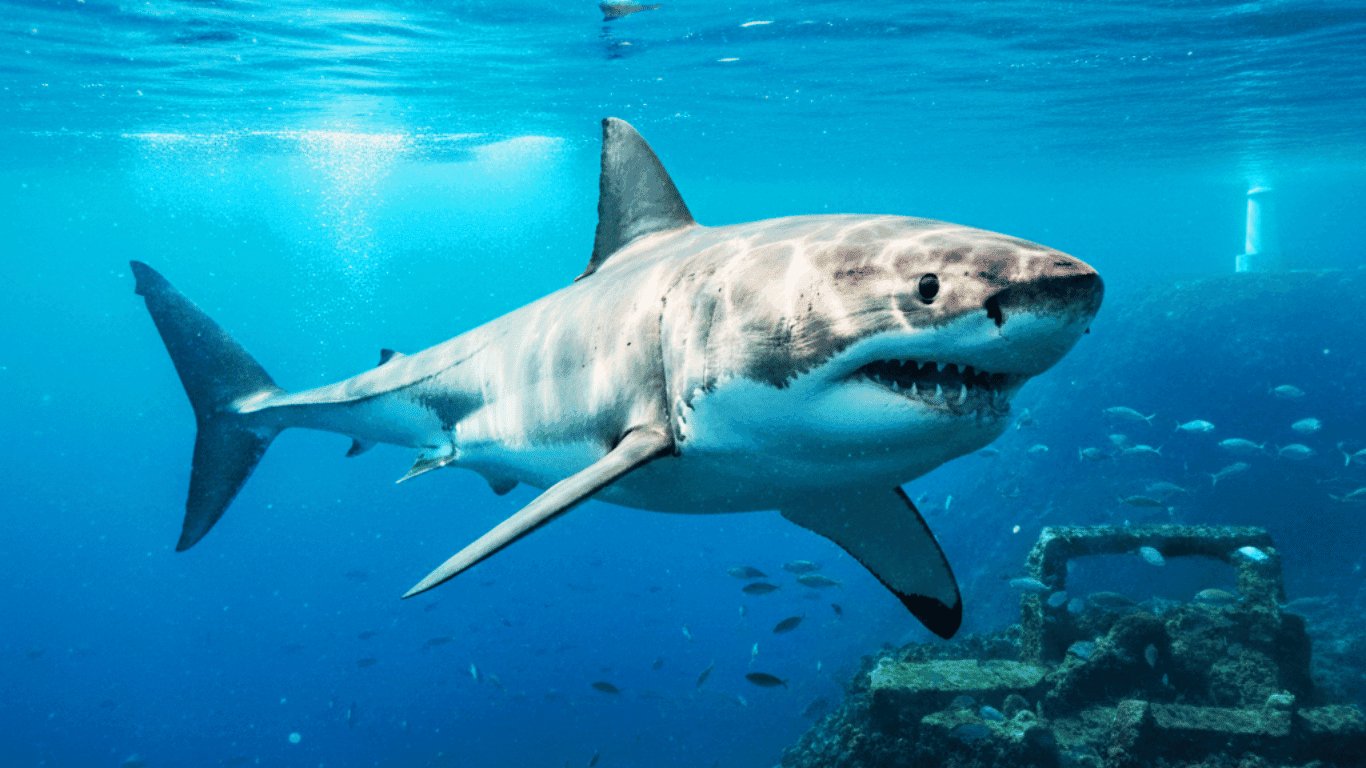
The Mediterranean Sea, often celebrated for its azure waters and tourism, is hiding a grim biological crisis beneath its surface. New research conducted by US scientists in partnership with the UK charity Blue Marine Foundation warns that the region’s great white shark population is on the brink of total collapse.
Despite being protected under international law, these apex predators are falling victim to illegal fishing practices and a lack of enforcement across North African coastlines.
A Protected Species Sold in Plain Sight
Great white sharks are among more than 20 species in the Mediterranean granted legal protection. This status makes it strictly illegal to fish for, landing, or sell them. However, the reality on the ground—and on social media—paints a different picture.
Researchers monitoring fishing ports in North Africa discovered that at least 40 great white sharks have been killed in 2025 alone. Verified footage has surfaced showing:
-
A large great white being hauled ashore in Algeria.
-
The remains of short-finned mako sharks (another threatened species) being prepared for sale in Tunisia.
Dr. Francesco Ferretti, a lead researcher from Virginia Tech, notes that while these sightings are tragic, they represent a broader trend of dramatic decline that has spanned decades.
The Most Overfished Sea on Earth
The Mediterranean holds the unenviable title of the world’s most heavily fished body of water. Speaking from a research vessel off the coast of Sicily, Dr. Ferretti highlighted the scale of the threat.
“No other stretch of water is fished like the Mediterranean Sea,” Dr. Ferretti told BBC News. “The impact of industrial fishing has been intensifying… and it’s plausible that they will go extinct in the near future.”
Because of these pressures, the International Union for the Conservation of Nature (IUCN) now classifies the Mediterranean white shark population as Critically Endangered.
The Last Stronghold: The Strait of Sicily
In a race against time, scientists are focusing their efforts on the Strait of Sicily. This narrow stretch of water between Italy and North Africa is considered the “last stronghold” for several of the sea’s most threatened shark species.
In late 2025, the research team embarked on a high-stakes mission with a clear objective: to fit a satellite tracking tag onto a Mediterranean great white shark. Achieving this would be a historical first for the region, providing vital data on migration patterns and helping conservationists identify specific areas that require urgent protection.
Why the Mediterranean Great White Matters
The loss of the great white shark would be more than just the disappearance of an iconic predator; it would signify a total breakdown of the Mediterranean’s marine ecosystem. As apex predators, these sharks maintain the balance of the food chain. Without them, the “ripple effect” could lead to the collapse of other fish stocks that millions of people rely on for food and livelihoods.
To save the Mediterranean great white, international cooperation must move beyond “paper protection” to active, on-the-ground enforcement in the ports where these endangered animals are currently being traded.