The countdown to a new era of lunar exploration has begun. For the first time in more than half a century, NASA is preparing to send a crewed mission toward the Moon. The Artemis II mission marks a pivotal moment in human history, signaling our return to deep space and laying the groundwork for future Mars exploration.
As the astronauts make their final trek to the launch pad, the world watches a historic milestone unfold.
The Mission: To the Far Side of the Moon
The Artemis II mission is a 10-day flight test designed to prove that the Orion spacecraft’s life-support systems are ready to sustain astronauts in deep space. While the crew will not make a physical landing on the lunar surface, their flight path is record-breaking.
The mission trajectory involves a “free-return” profile, where the spacecraft will circle the Moon and use its gravity to sling-shot back toward Earth. During this journey, the four-person crew will travel further from Earth than any human being has ever ventured.
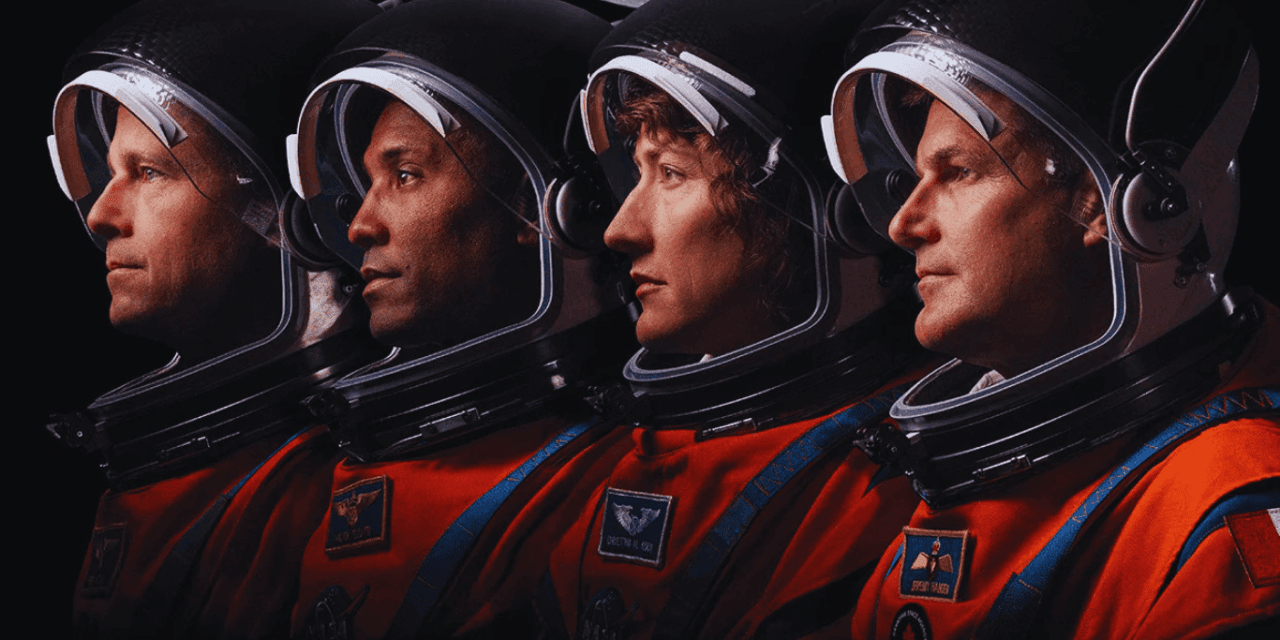
Meet the Artemis II Crew
The mission represents a collaborative international effort, featuring a diverse team of highly decorated pilots and scientists:
-
Reid Wiseman (Commander): A veteran of the International Space Station.
-
Victor Glover (Pilot): The pilot of the first SpaceX Crew Dragon mission to the ISS.
-
Christina Koch (Mission Specialist): Holder of the record for the longest single spaceflight by a woman.
-
Jeremy Hansen (Mission Specialist): Representing the Canadian Space Agency (CSA) in his first flight to space.
Living in a “Minibus” for 10 Days
The journey is a feat of endurance as much as engineering. The crew will live and work inside the Orion MPCV (Multi-Purpose Crew Vehicle), a capsule roughly the size of a minibus. Despite the cramped quarters, the spacecraft is equipped with state-of-the-art technology to handle the extreme radiation and thermal environments of deep space.
Pushing this capsule out of Earth’s orbit is the Space Launch System (SLS), the most powerful rocket ever built, providing the massive thrust required to break free of Earth’s gravity and reach the lunar neighborhood.